1
/
of
7
DTEC DUT900 Professional Digital Ultrasonic Flaw Detector | 7" Touchscreen NDT Inspection System
DTEC DUT900 Professional Digital Ultrasonic Flaw Detector | 7" Touchscreen NDT Inspection System
Regular price
$2,368.95 USD
Regular price
$2,724.95 USD
Sale price
$2,368.95 USD
Taxes included.
Shipping calculated at checkout.
9999 in stock
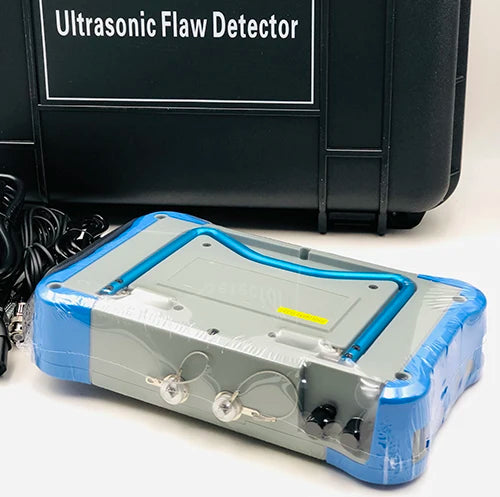
The DTEC DUT900 Digital Ultrasonic Flaw Detector is a professional portable ultrasonic testing (UT) instrument designed for fast, accurate non-destructive inspection of welds, forgings, pipes, pressure vessels, and structural components. Featuring A-Scan, B-Scan, DAC, AVG, and TCG functions, this rugged flaw detector delivers reliable defect detection, sizing, and evaluation for Oil & Gas, petrochemical, power generation, aerospace, and industrial manufacturing applications.
Couldn't load pickup availability
Product features
Product features
- Professional digital ultrasonic flaw detector for non-destructive testing (NDT)
High-precision defect detection, sizing, and positioning
Detects cracks, weld defects, porosity, inclusions, laminations, and other internal flaws
7-inch 800 × 480 color display with functional press keys
Supports A-Scan and B-Scan inspection modes
Automatic calibration for probe delay, K-value, X-value, and sound velocity
Built-in DAC, AVG, and TCG evaluation curves
Stores up to 500 inspection channels and 500 A-scan waveforms
Data export and report generation via PC software
Supports multiple probe types: single, dual, through-transmission, and immersion
Frequency range: 0.5–20 MHz
Inspection range up to 15,000 mm
Adjustable gain up to 110 dB
Rechargeable lithium-ion battery with 8+ hours of continuous operation
Rugged IP65 housing for field inspections
Suitable for weld inspection, pressure vessels, pipelines, forgings, steel structures, boilers, railways, aerospace, automotive, and Oil & Gas asset integrity programs.
Materials and care
Materials and care
- Housing: High-impact ABS industrial enclosure
Protection Rating: IP65 dust and water resistant
Clean the display and probe connectors after each inspection.
Store the instrument in its protective carrying case when not in use.
Recharge the lithium battery regularly to maximize service life.
Avoid excessive impacts, extreme temperatures, and prolonged moisture exposure.
Perform routine calibration to maintain inspection accuracy.
Share